🚚 Free Worldwide Shipping on All Orders!Shop Now

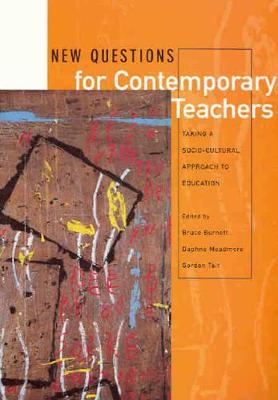
New Questions for Contemporary Teachers
New Questions for Contemporary Teachers: taking a socio-cultural approach to education is an introductory overview of sociology of education. Typically taught as a compulsory subject in education programs, the book covers the needs of both primary and secondary student teachers. From the same team that authored Understanding Education and Practising Education , this title comprises all new chapters reflecting current sociological and educational perspectives. It is divided into three distinctive sections: How to govern? Do we all get a fair go? and Where Now? Section 1 examines the mechanisms of governance and rejects the simplistic ' domination and coercion ' model of the exercise of power. Each chapter within the section explores the ways in which social management occurs through careful and targeted regulation. Section 2 investigates the questions about how society distributes wealth and access without lapsing into reductionism . It focuses on how notions such as ' cultural capital ' and ' habitus' shape educational outcomes. Section 3 examines the issues relevant to the future of education such as the advances in technology , the role the government plays in implementing school-based management practices and ways in which schools can become more globalised and become far more multi-national , multi-faith and multi-cultural geographic communities .
New Questions for Contemporary Teachers: taking a socio-cultural approach to education is an introductory overview of sociology of education. Typically taught as a compulsory subject in education programs, the book covers the needs of both primary and secondary student teachers. From the same team that authored Understanding Education and Practising Education , this title comprises all new chapters reflecting current sociological and educational perspectives. It is divided into three distinctive sections: How to govern? Do we all get a fair go? and Where Now? Section 1 examines the mechanisms of governance and rejects the simplistic ' domination and coercion ' model of the exercise of power. Each chapter within the section explores the ways in which social management occurs through careful and targeted regulation. Section 2 investigates the questions about how society distributes wealth and access without lapsing into reductionism . It focuses on how notions such as ' cultural capital ' and ' habitus' shape educational outcomes. Section 3 examines the issues relevant to the future of education such as the advances in technology , the role the government plays in implementing school-based management practices and ways in which schools can become more globalised and become far more multi-national , multi-faith and multi-cultural geographic communities .
$2.15
Original: $6.14
-65%New Questions for Contemporary Teachers—
$6.14
$2.15Description
New Questions for Contemporary Teachers: taking a socio-cultural approach to education is an introductory overview of sociology of education. Typically taught as a compulsory subject in education programs, the book covers the needs of both primary and secondary student teachers. From the same team that authored Understanding Education and Practising Education , this title comprises all new chapters reflecting current sociological and educational perspectives. It is divided into three distinctive sections: How to govern? Do we all get a fair go? and Where Now? Section 1 examines the mechanisms of governance and rejects the simplistic ' domination and coercion ' model of the exercise of power. Each chapter within the section explores the ways in which social management occurs through careful and targeted regulation. Section 2 investigates the questions about how society distributes wealth and access without lapsing into reductionism . It focuses on how notions such as ' cultural capital ' and ' habitus' shape educational outcomes. Section 3 examines the issues relevant to the future of education such as the advances in technology , the role the government plays in implementing school-based management practices and ways in which schools can become more globalised and become far more multi-national , multi-faith and multi-cultural geographic communities .